
Degenerative conditions of the back are a common cause of back pain in Singapore and often require careful assessment to determine the most appropriate treatment. Age-related wear and tear of the spinal discs, joints, or bones may lead to persistent pain, stiffness, and reduced mobility.
Back Pain Treatment Options
Degenerative back pain is often caused by wear and tear of the spine. Slipped disc, spinal stenosis, and bone spurs are common degenerative spine conditions where the spinal structures deteriorate progressively. As one ages, these issues may cause back pain and affect daily activities such as balance and movement.
Below are the back pain treatment options offered by Dr Hee, an orthopaedic spine surgeon in Singapore. Treatment depends on the underlying cause of degenerative back pain and may range from minimally invasive procedures to surgical intervention where appropriate.
Spinal Injections (Percutaneous Nerve Root Block, Facet Joint Block)
Spinal injections can be useful in alleviating pain caused by many degenerative spine conditions (e.g. slipped disc, spinal stenosis, bone spurs), and may help support recovery. The spinal injections are performed under local anaesthesia or light sedation.
The procedure involves lying on a specialised operating table which allows x-ray images to be taken of the spine. A fine needle will be inserted into the target area to administer medications that help reduce irritation in the nerves and/or spinal joints.
Percutaneous Disc Decompression e.g. Nucleoplasty
In situations where a bulging disc is irritating the nerves, percutaneous decompression of the disc may be helpful in alleviating symptoms. The procedure aims to reduce pressure on the nerves by using radiofrequency to cause a small volume reduction in the disc.
You will be gently sedated for the procedure, and it is performed with the help of x-ray imaging of the affected spine. After the procedure, you will need to wear a removable back brace for approximately 8 weeks.
Minimally Invasive Microendoscopic Discectomy
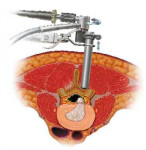
When the disc has slipped or bulged to the extent that percutaneous decompression is not effective, microendoscopic discectomy may be considered. This minimally invasive procedure uses an operating microscope, which helps improve precision and safety during spine surgery.
General anaesthesia will be administered for the surgery, and a tube (Figure 1) will be placed accurately at the area of interest with the help of x-ray imaging. A microscope will then be used to illuminate and magnify the surgical field, enhancing the safety and effectiveness of the procedure.
Patients are usually able to go home the next day. A removable back brace is typically worn for about 8 weeks.
Dynamic Stabilization
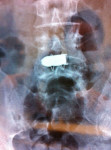
In cases where there is significant back pain or spinal instability, dynamic stabilization may be a viable option. This procedure “internally splints” and offloads the affected spinal segment without actually fusing or “locking” the segment, allowing preservation of flexibility.
This surgical procedure may also be performed together with decompression of the affected nerves using an operating microscope. Dynamic spacers can be inserted in a minimally invasive fashion (Figure 2). A removable back brace is typically worn for approximately 8 weeks.
Artificial Disc Replacement
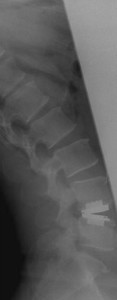
Artificial disc replacement in the spine may be a suitable procedure for selected patients. In general, if you are under 60 years of age and the problem is related to a single spinal disc, you may be a suitable candidate for this surgery (Figure 3).
The surgery involves general anaesthesia, with the patient lying face up. Using real-time x-ray imaging, the damaged disc is removed from the front so that the nerves are fully decompressed. An artificial disc is then inserted into the original disc space.
The device is typically made from a combination of metal (such as titanium or cobalt-chromium) and plastic components. Depending on the individual situation, a back brace may need to be worn for several weeks after surgery.
Minimally Invasive Spine Fusion
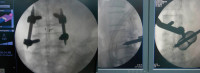
Small incisions are made, allowing the spine to be accessed safely and effectively using specially designed retractors, real-time x-ray imaging, and an operating microscope (Figure 4).
In the lower back, the affected disc will be removed using a minimally invasive technique. A plastic or carbon cage filled with either the patient’s own bone or other bone graft materials will then be inserted. The cage is secured with screws and rods placed through minimally invasive techniques.
After surgery, a morphine pump may be used to help with pain control. For a one-level fusion procedure, patients are usually able to go home within 3 to 5 days. A removable back brace is typically worn for about 8 weeks.
When to See a Spine Surgeon
Degenerative back pain can arise from various spine conditions such as slipped discs, spinal stenosis, or degenerative disc disease. Treatment options range from spinal injections and minimally invasive procedures to surgical stabilisation, depending on the severity of symptoms and the underlying cause. An assessment by a spine surgeon helps determine the most appropriate treatment approach based on each patient’s condition.

|
Dr Hee Hwan Tak
Orthopaedic Surgeon & Spine Specialist MBBS (Singapore) | FRCS (Edinburgh) | FRCS (Glasgow) | FAMS (Ortho) |
| View Dr Hee Hwan Tak’s Profile → |