
Spinal injuries can cause pain and limit mobility. Minimally invasive treatments like vertebroplasty, kyphoplasty, and spinal stabilization can relieve discomfort, support your spine, and help you return to daily activities more quickly.
Percutaneous Vertebroplasty & Kyphoplasty for Spinal Fractures in Singapore
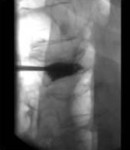
Most spinal fractures in the elderly are caused by osteoporosis, while a smaller number result from tumours. Vertebroplasty, the injection of cement into the vertebral body under sedation, is a low-risk, high-return procedure as the cement stabilizes the fractured segment of the spine (Figure 1). Typically, patients can walk and return home the next day after vertebroplasty.
An MRI will be performed before the procedure to identify fresh or new fractures that will benefit most. You will lie face down during the procedure, with sedation administered but without general anesthesia. Under real-time X-ray imaging, two needles are accurately placed into each fractured vertebra. A dye is injected to ensure there is no leakage outside the vertebra, followed by slow cement injection under careful monitoring.
A modification of vertebroplasty is kyphoplasty, where two balloons are used to inflate the fractured vertebra before cement introduction. Patients typically rest in bed on the day of the procedure and can start moving around the following day. Discharge is usually possible the next day.
Minimally Invasive Spinal Stabilization
 Figure 2
For younger patients, bone cement injection alone may not provide sufficient stability for the fractured spine. Minimally invasive spinal stabilization can help maintain stability and promote faster recovery (Figure 2).
This procedure is performed with the patient lying face down under general anesthesia. Titanium screws and rods are inserted using small incisions under X-ray guidance to stabilize the spine.
Watch Dr Hee Hwan Tak discuss Kyphoplasty for spinal fractures in Singapore on Channel 8
When to Consult a Spine Surgeon
Patients with spinal injuries should consider consulting a spine surgeon if they experience persistent back pain, difficulty moving, or limited mobility despite conservative treatment. Early assessment by a spine surgeon helps determine the most suitable treatment, including vertebroplasty, kyphoplasty, or spinal stabilization, based on the patient’s specific condition and overall health.

|
Dr Hee Hwan Tak
Orthopaedic Surgeon & Spine Specialist MBBS (Singapore) | FRCS (Edinburgh) | FRCS (Glasgow) | FAMS (Ortho) |
| View Dr Hee Hwan Tak’s Profile → |