
Understanding Inflammatory Spine Conditions
Inflammation is the body’s natural response to tissue irritation or damage and may cause swelling, redness, heat, and loss of function. Inflammation of a joint is called arthritis, and it can be confined to a single joint or may be widespread, as seen in rheumatoid arthritis.
If you have rheumatoid arthritis or other inflammatory spine conditions, you may develop brittle bones, spinal instability, or nerve compression. The spine may become misaligned, and persistent neck pain can affect daily function. In some cases, patients may be referred by a rheumatologist to a spine surgeon for further assessment of the spine.
Surgical Treatment for Rheumatoid Arthritis and Other Inflammatory Spine Conditions
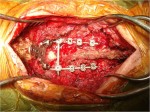
In more advanced cases where spinal instability or nerve compression occurs, surgical treatment may be considered.
Surgery usually involves inserting titanium screws and rods to correct spinal deformity, as well as decompressing the nerves. (Figure 1)
This procedure is more commonly performed from the back of the neck (posterior approach). It involves positioning the patient face-down during surgery, with the head secured safely using a specialised head holder.
Occasionally, fixation to the base of the skull (occipitocervical fusion) is required to achieve stability of the spine in more complex cases.
When to Consider Surgery
Surgery may be recommended when there is progressive spinal deformity, instability, or neurological symptoms such as nerve compression that do not respond to conservative treatment, and evaluation by a spine surgeon can help determine whether surgical management is appropriate.

|
Dr Hee Hwan Tak
Orthopaedic Surgeon & Spine Specialist MBBS (Singapore) | FRCS (Edinburgh) | FRCS (Glasgow) | FAMS (Ortho) |
| View Dr Hee Hwan Tak’s Profile → |