
Reconstructive surgery for thoracolumbar spine deformity may be considered when significant spinal deformity affects alignment, function, and quality of life. When the thoracolumbar spine is involved, the impact may extend beyond posture and appearance, sometimes leading to pain, neurological symptoms, and limitations in daily life.
What Is A Thoracolumbar Curve?
The thoracolumbar curve refers to a spinal curve with its apex at the first lumbar vertebra (lower back) or the twelfth thoracic vertebra (middle back). In some cases, a thoracolumbar spinal injury may not have been treated in a timely manner, which can lead to significant spinal deformity, usually resulting in a “crooked” or kyphotic spine.
Spinal deformity may also occur due to infections such as tuberculosis of the spine, which can cause destruction and collapse of the vertebrae in the back, leading to a crooked or kyphotic spinal alignment.
The consequences of thoracolumbar spine deformity may include back pain and aching, as well as symptoms secondary to spinal cord compression, such as extremity weakness, numbness, and tingling. In more severe cases, control of the bladder and bowel may also be affected.
How Is Thoracolumbar Spine Surgery Performed?
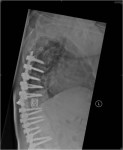
Reconstructive surgery for thoracolumbar spine deformity can be challenging (Figure 1). The procedure may be performed from the back, the front, or using both approaches depending on the nature and severity of the deformity.
When both approaches are required, the procedures may either be performed on the same day or staged (i.e. performed at two different times about 5 to 7 days apart). These surgical techniques aim to correct the spinal alignment, stabilise the spine, and relieve pressure on the spinal cord and surrounding nerves.
When Is Surgery Considered for Thoracolumbar Spine Deformity?
Thoracolumbar spine deformity may cause pain, spinal imbalance, and neurological symptoms when severe. When conservative treatment is no longer effective, reconstructive spine surgery may be considered to correct spinal alignment and stabilise the spine.
A detailed assessment by a spine surgeon can help determine the most appropriate treatment approach based on the severity of the deformity, symptoms, and overall spinal stability.

|
Dr Hee Hwan Tak
Orthopaedic Surgeon & Spine Specialist MBBS (Singapore) | FRCS (Edinburgh) | FRCS (Glasgow) | FAMS (Ortho) |
| View Dr Hee Hwan Tak’s Profile → |