
Degenerative conditions of the cervical spine refer to wear and tear changes that occur over time in the neck.
Slipped disc, prolapsed disc, and bone spurs are common degenerative conditions of the neck as the spine structure deteriorates progressively. As one ages, these conditions may lead to neck pain and affect daily activities such as balance and movement.
When any of these structures are affected, they may contribute to nerve irritation and discomfort in the neck, which may require medical assessment.
Treatment Options for Degenerative Neck Conditions
Treatment options for degenerative neck conditions may range from non-surgical procedures to advanced neck surgery depending on severity.
Spinal Injections (Percutaneous Nerve Root Block, Facet Joint Block)
Spinal injections can be effective in alleviating pain in many degenerative conditions of the neck, and they may help speed up the recovery process.
Spinal injections are performed under local anaesthesia or light sedation. This procedure involves the patient lying on a special operating table which allows x-ray images to be taken of the spine. A fine needle is inserted into the target area to administer medications to the nerves and/or spinal joints.
Percutaneous Disc Decompression (Nucleoplasty)
In cases where neck pain is caused by a bulging disc irritating the nerves, percutaneous decompression of the disc may help alleviate symptoms.
The procedure, Nucleoplasty, aims to reduce pressure on the nerves by using radiofrequency energy to cause a small volume reduction in the disc.
The patient will be gently sedated, and the procedure is performed with the help of CT (computed tomography) imaging. A soft neck collar is typically required for about 4 weeks after the procedure.
Anterior Cervical Discectomy and Fusion (ACDF)
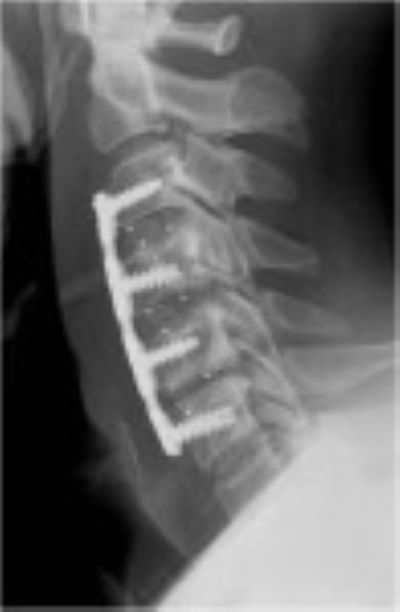
Anterior cervical discectomy and fusion (ACDF) is an operation performed from the front of the neck to relieve pressure on one or more nerve roots or the spinal cord. The term is derived from anterior (front), cervical (neck), and fusion (joining vertebrae with a bone graft).
ACDF is one of the more commonly performed spinal operations today. The aim is to relieve compression of the nerves and/or spinal cord, allowing recovery of neurological function.
By relieving compression, blood supply is improved, allowing delivery of nutrients and removal of waste products from neural structures.
Fusion is commonly performed using a bone graft from the patient or other sources. This helps maintain spinal alignment and stabilise the affected segment.
During surgery, neck muscles are gently separated to access the cervical spine. The windpipe and food passage are carefully retracted to allow a safe surgical field.
The affected disc is identified using x-ray imaging and removed with the aid of an operating microscope. Once decompression is completed, the nerves and/or spinal cord are confirmed to be free of compression.
Stabilisation is achieved using a titanium plate and screws placed in front of the spine. This provides immediate stability, often reducing the need for prolonged external collar use.
In some cases, bony spurs located behind the vertebral body may require removal of both the disc and vertebral body (anterior cervical corpectomy).
Artificial Disc Replacement
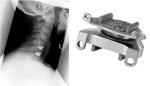
Artificial disc replacement is a treatment option for selected patients with a deteriorated cervical disc.
In general, patients under 60 years old with a single-level disc problem may be suitable candidates.
The surgery is performed under general anaesthesia with the patient lying face up. Using real-time x-ray guidance, the damaged disc is removed completely to decompress the nerves. An artificial disc made of metal (titanium or cobalt-chromium) and plastic is then inserted into the disc space.
A soft neck collar may be required for several weeks after surgery depending on the condition.
Posterior Decompression and Stabilisation
In some cases, a spine surgeon may recommend surgery from the back of the neck (posterior approach), especially when multiple levels of nerve or spinal cord compression are present.
The goal of posterior surgery is to increase space available for the nerves and spinal cord. This may be achieved through laminectomy, where the lamina (bone covering the spinal cord) is removed.
Figure 3: Posterior decompression with spinal instrumentation
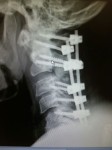
In some cases, stabilisation is performed using titanium screws placed at the back of the neck (fusion).
Laminoplasty
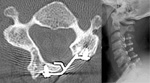
Laminoplasty (Figure 4) is an alternative surgical option to laminectomy for cervical spinal stenosis, especially when multiple levels are affected.
This procedure creates more space for the spinal cord by forming an “open door” in the lamina while preserving the bone structure, rather than removing it. This may reduce the need for spinal fusion.
Newer techniques may use mini plates and screws to secure the opened lamina while preserving neck mobility.
A key requirement is that the spine should not be significantly crooked or in kyphosis, as this may reduce surgical effectiveness.
Cervical Foraminotomy
Cervical foraminotomy is an operation to enlarge the space where a spinal nerve root exits the cervical spinal canal, relieving symptoms of a “pinched nerve”.
This procedure is often performed alongside laminectomy or laminoplasty. When performed as a standalone procedure, it can be done using a minimally invasive approach.
When to See a Spine Surgeon
Neck pain can arise from a range of conditions affecting the cervical spine and surrounding structures. If symptoms persist, worsen, or are associated with neurological issues such as numbness, weakness, or radiating pain, it is advisable to seek evaluation from a spine surgeon. Early assessment helps guide appropriate treatment and ensures timely management of underlying spinal conditions.

|
Dr Hee Hwan Tak
Orthopaedic Surgeon & Spine Specialist MBBS (Singapore) | FRCS (Edinburgh) | FRCS (Glasgow) | FAMS (Ortho) |
| View Dr Hee Hwan Tak’s Profile → |