
Direct lateral interbody fusion (DLIF), a type of lumbar interbody fusion, can now be performed through a minimally invasive side approach. This method may support faster healing, safer surgery, and favourable long-term outcomes in suitable patients.
Lateral Lumbar Interbody Fusion
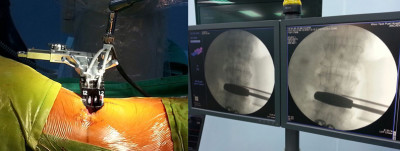
Although most lumbar spine (low back) fusions are performed from the back (see Minimally Invasive Spine Fusion), spine fusion can also be performed from the side of the body, usually from the left. The advantages of this approach include the ability to perform the surgery through minimally invasive techniques and to place a larger cage with more bone graft material, which may help promote faster bone fusion.
With the use of real-time nerve monitoring, the safety of this procedure is further enhanced (Figure 1).
The use of this procedure may become more widespread as the technique continues to develop, particularly with increasing use in the surgical management of conditions such as degenerative scoliosis. In these situations, multiple levels of the spine may need to be fused, and achieving successful bone fusion can be one of the challenges.
When to See a Spine Surgeon
Direct lateral interbody fusion is a minimally invasive surgical technique used in selected lumbar spine conditions. The side approach allows the placement of larger implants while minimising disruption to back muscles. An assessment by a spine surgeon helps determine whether this technique is suitable for an individual patient.

|
Dr Hee Hwan Tak
Orthopaedic Surgeon & Spine Specialist MBBS (Singapore) | FRCS (Edinburgh) | FRCS (Glasgow) | FAMS (Ortho) |
| View Dr Hee Hwan Tak’s Profile → |