
Revision spine surgery may be performed when a previous spinal operation does not achieve the expected results or when new complications develop. These procedures can be complex and may cause significant stress for patients and their families. A careful evaluation by a spine specialist is essential to identify the reasons for the failed surgery and to determine the safest and most effective treatment plan.
Thoracolumbar Curve and Its Role in Spine Conditions
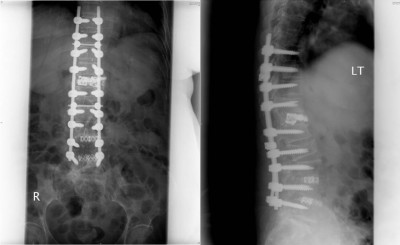
The thoracolumbar curve is located at the junction of the middle and lower back, with its apex at either the twelfth thoracic vertebra or the first lumbar vertebra. Conditions affecting this region can contribute to pain, deformity, or instability, and in some cases may require revision spine surgery.
Causes of Failed Spine Surgery
Failed spine surgery may occur for several reasons, and identifying the underlying cause is an important step before considering revision spine surgery. A spine specialist may recommend diagnostic tests such as MRI with contrast, CT scans, bone scans, and targeted injections to the nerves or facet joints.
Some common causes of failed spine surgery include:
- Non-union, where the vertebrae fail to fuse properly
- Residual spinal stenosis or persistent nerve compression
- Adjacent segment or level disease, where nearby segments become affected
- Kyphotic deformity, also referred to as a “crooked” spine
Advanced Techniques Used in Revision Spine Surgery
If a surgical cause is identified, our team has the experience to perform revision spine surgery safely and effectively. To improve fusion and support bone healing, state-of-the-art materials such as bone morphogenetic protein or demineralised bone matrix may be used.
In many cases, stabilisation may need to extend above and below the original levels of surgery. Fixation can be further strengthened through bone cement injection around the screws. Modern tools such as surgical navigation and Pediguard are also used to increase precision and enhance the overall safety of the procedure.
When Is Revision Spine Surgery Considered?
Revision spine surgery may be considered when persistent pain, nerve compression, spinal instability, or failed fusion occurs after a previous procedure. A thorough assessment by a spine surgeon helps determine whether further surgery is necessary and which surgical techniques may provide the best possible outcome.

|
Dr Hee Hwan Tak
Orthopaedic Surgeon & Spine Specialist MBBS (Singapore) | FRCS (Edinburgh) | FRCS (Glasgow) | FAMS (Ortho) |
| View Dr Hee Hwan Tak’s Profile → |