Principal Goal
The principal goal of Nerve Conduction Study (NCS) and Electromyography (EMG) is to localise neuromuscular disorders.
These tests help determine whether the disorder is:
- Neuropathic (nerve-related)
- Myopathic (muscle-related)
- A disorder of neuromuscular transmission
- A disorder involving the central nervous system (brain and spine)
Nerve conduction studies and electromyography are commonly used to evaluate nerve, muscle, and spinal nerve disorders.
What are Nerve Conduction Study (NCS) and Electromyography (EMG)?
NCS is a test conducted to assess peripheral nerves in the upper and lower limbs. It measures how electrical impulses travel through the nerves. Electrical impulse conduction may be affected and slowed if the nerve is diseased, damaged, injured, or compressed.
EMG is a test conducted to study the electrical activity of muscle fibres individually and collectively via a needle electrode.
How are NCS and EMG Performed?
NCS
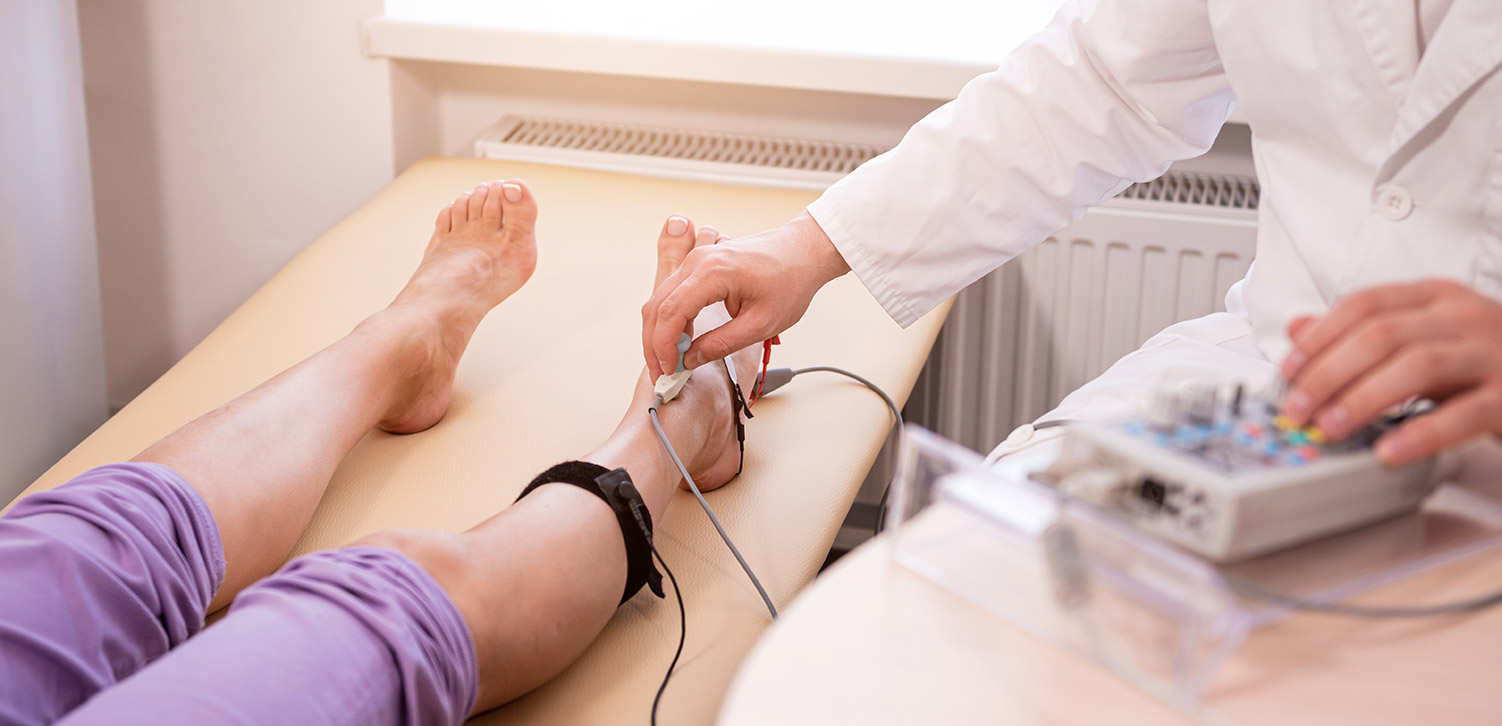
Small sticker electrodes are placed on the skin and the nerve is stimulated using electrical current. The electrical impulse generated by the nerve is then recorded.
EMG
A small needle electrode is inserted into the muscles, where the electrical activity generated is assessed during needle insertion, periods of rest, and voluntary muscle contraction.
Conditions Diagnosed with NCS and EMG
NCS and EMG are commonly used to diagnose disorders affecting the peripheral nervous system, including disorders involving:
- Primary motor neurons (anterior horn cells)
- Primary sensory neurons (dorsal root ganglia)
- Nerve roots
- Brachial plexus
- Lumbar plexus
- Peripheral nerves
- Neuromuscular junctions
- Muscles
The pattern of nerve conduction and EMG abnormalities can often differentiate among these conditions and guide subsequent laboratory investigations.
Occasionally, information obtained from electrodiagnostic studies (NCS and EMG) may be specific enough to suggest a precise diagnosis.
Common Disorders of the Peripheral Nervous System
Peripheral Neuropathy
Pure Motor Neuropathy
- Motor neurone disease
- Amyotrophic lateral sclerosis
- Spinal muscular atrophy
- Monomelic amyotrophy
- Multifocal motor neuropathy
Pure Sensory Neuropathy
- Paraneoplastic
- Autoimmune
- Toxic
- Infectious
Mixed Sensory and Motor Neuropathy
- Axonal neuropathy
- Demyelinating neuropathy
- Mononeuritis multiplex
Radiculopathy
- Disc herniation
- Spondylosis
- Neoplastic causes
- Inflammatory causes
- Infarction
Plexopathy
- Radiation-induced
- Post-traumatic
- Inflammatory
- Entrapment-related
Neuromuscular Junction Disorders
- Myasthenia gravis
- Lambert-Eaton syndrome
Myopathy
- Hereditary muscle disease
- Acquired muscle disease
Who May Need NCS or EMG Tests?
Patients with the following symptoms may require NCS or EMG testing:
- Numbness
- Tingling sensations
- Abnormal sensations in the hands or legs
- Muscle weakness
- Muscle wasting
- Muscle cramps
- Muscle twitching
Example of a Clinical Scenario
A patient complains of numbness of the right upper limb, particularly affecting the right little and ring fingers, together with mild neck pain.
Electrophysiologic Evaluation
Nerve conduction studies are often normal, and the diagnosis may be established using needle EMG.
NCS helps exclude other conditions that may mimic radiculopathy, especially entrapment neuropathy and plexopathy.
NCS also helps exclude underlying ulnar neuropathy (entrapment neuropathy), while EMG is crucial in excluding underlying C8 radiculopathy, as both conditions may present with numbness affecting the little and ring fingers.
Contributed by Dr KK Queck, Consultant Neurologist
When to Consult a Spine Specialist
Persistent numbness, tingling, weakness, muscle wasting, or abnormal sensations in the arms or legs may indicate underlying nerve, muscle, or spinal conditions. Early assessment by a spine specialist, together with NCS and EMG testing, may help identify the underlying cause and guide appropriate treatment.

|
Dr Hee Hwan Tak
Orthopaedic Surgeon & Spine Specialist MBBS (Singapore) | FRCS (Edinburgh) | FRCS (Glasgow) | FAMS (Ortho) |
| View Dr Hee Hwan Tak’s Profile → |